Specialty training logbook for busy doctors
Stop scrambling before appraisals. Enjoy a review-ready portfolio without the headaches.






Documentation chaos shouldn't derail your training
Every specialty trainee knows the struggle: excellent clinical work, chaotic documentation.

The evidence scramble
Months of experience scattered across notebooks, sticky notes, spreadsheets, and half-remembered cases. When review time looms, the evidence hunt is a nightmare.
Manic shifts, endless demands
You're managing full patient loads, on-call shifts, and study. The last thing you need is to spend hours finding evidence to prove your skills.
Assessment stress
Every specialty has different competency frameworks, evidence requirements, and assessment formats. Miss something crucial and your training progression suffers.

Turn logbook stress into training success
Alessia captures everything that matters for your specialty training in one intelligent platform. Log clinical work in seconds, build portfolios as patient care happens, and stay assessment-ready.

Everything in one place
Procedures link to cases, cases link to sessions; smart tagging means you'll lose a case again. Everything connects and builds a complete training story.

Log while you work
Log procedures in seconds between wards. Offline mode works in hospital dead zones. Come back later and deepen entries to capture the granularity your training requires.

Always review-ready
Real-time tracking shows exactly what you've done. Whether you want reports for official e-portfolios or standalone submissions, your logbook stays export-ready.


ICM residents often have to devise their own logbooks on outdated Excel sheets that are hard to use on the go, and supervisors then need summary logbooks on top. I have tried various logbooks in the past, but Alessia outperforms them all! The team have really worked with clinicians to design an app that is simple to use, pleasing on the eye, and reflects exactly what we need to log and show as residents. I'd definitely recommend it!


Built specifically for specialty training needs
Custom Procedure Templates
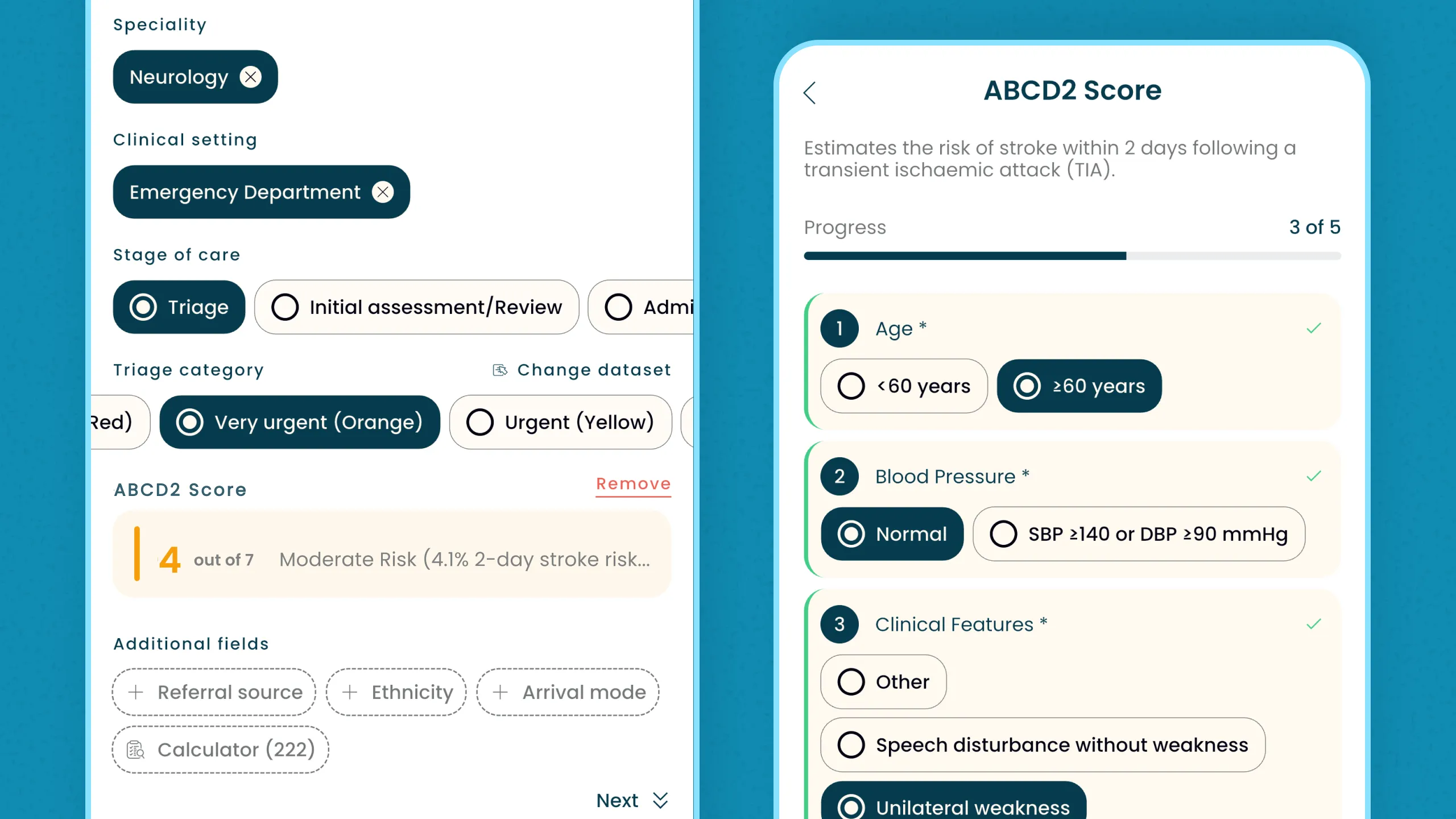
Tailor case templates and procedure entries to your specialty training needs with our comprehensive library of optional fields and scales.

Assessment-Ready Reports
Customise ranges and export PDF and spreadsheet records for submission. Whether you need a simple logbook count or extensive reports for specialty board reviews - you're always prepared.

Connected Evidence Chains
Link procedures to cases, cases to ward rounds, reflections to any entry. Build evidence stories that show progression, depth and clinical insight, not just activity counts.
Smart Case Tagging
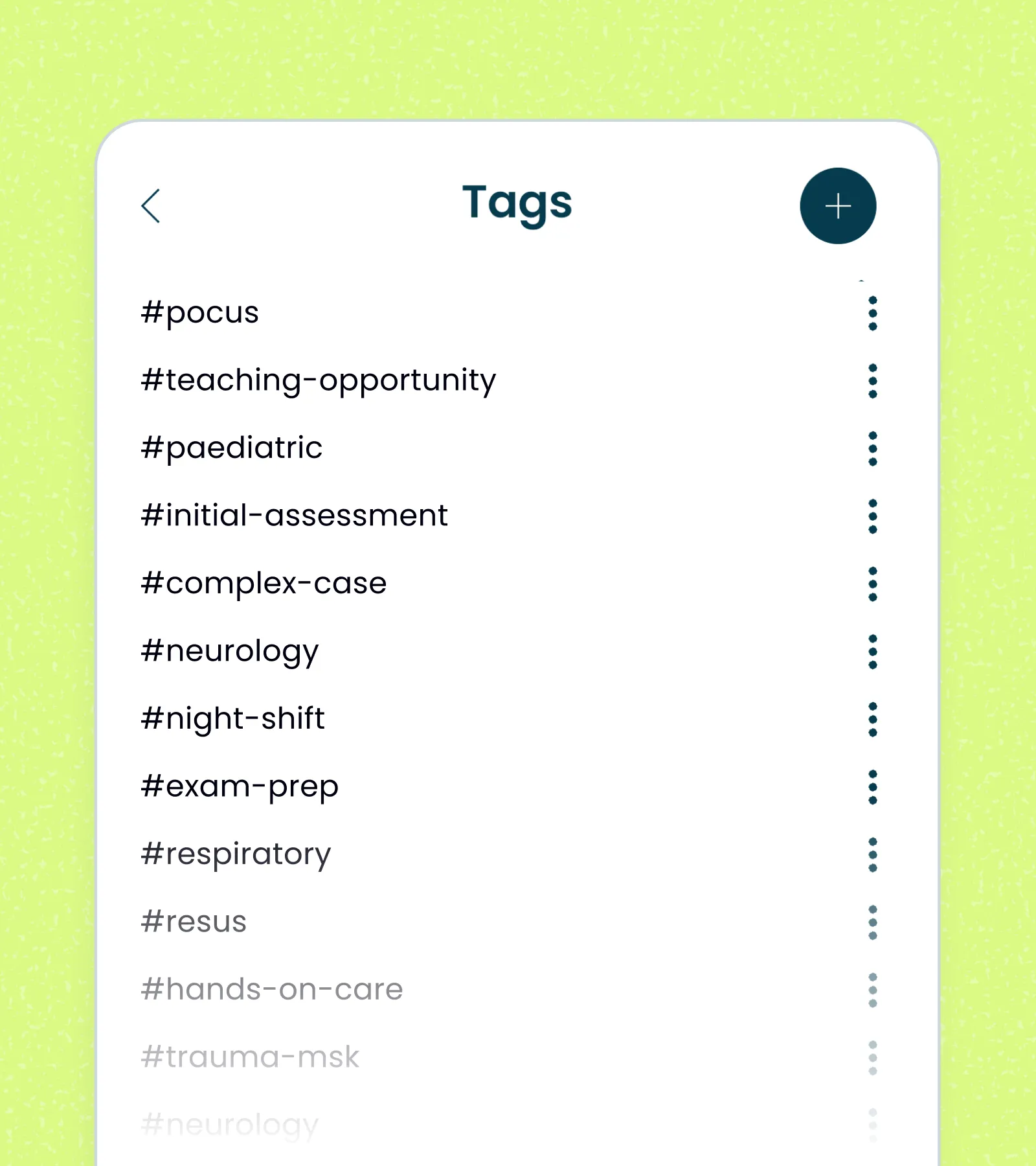
Tag entries your way: #complex-case #exam-prep #night-shift #teaching-opportunity. Filter instantly to find specific evidence or build themed reports for different assessments.
Competency Progress Tracking
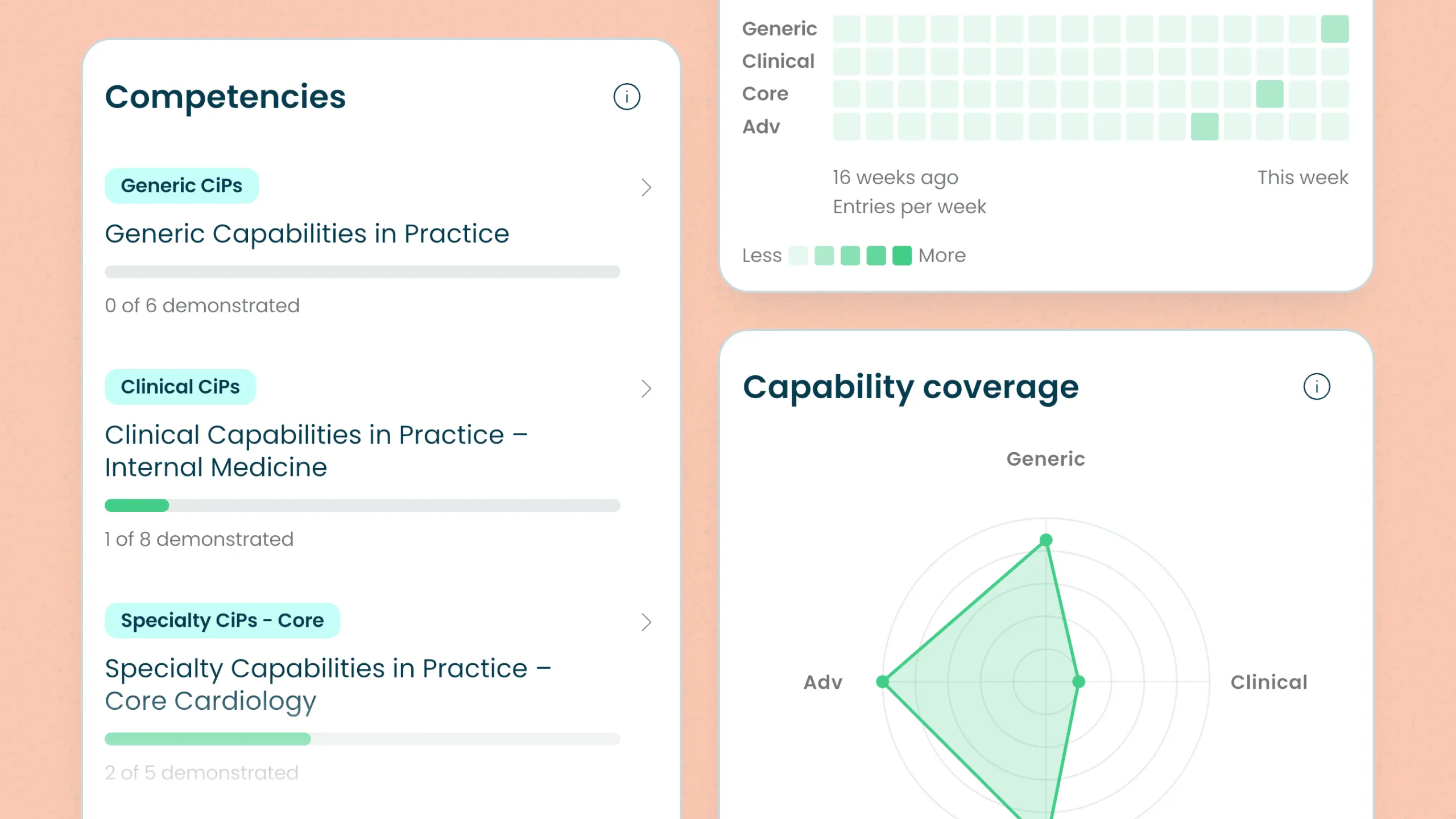
See exactly what evidence you have to prove key competencies. Real-time dashboards show your progress against curriculum frameworks, highlighting gaps before your supervisors do.
From -iatry to -atrics and everything in between
FAQs
Weighing up fit and flexibility? Start here with our short answers to the questions specialty trainees ask most.
Free tools are fine for basic counts, but they rarely prepare you for rigorous training reviews or international recognition. Alessia builds your portfolio into a coherent story of responsibility and growth, covering the full breadth of your clinical world. Thoughtful tooling - like tags to group work meaningfully, competencies to anchor evidence to the frameworks in our growing library, and goals to define what "enough" looks like - makes progress visible and useful. Most free products don't offer this structure or clarity, leaving you to juggle spreadsheets and manual cross-checks.
Alessia currently supports 11 assessment types:
- Acute Care Assessment Tool (ACAT)
- Case-based Discussion (CbD)
- Direct Observation of Procedural Skills (DOPS)
- Mini Clinical Evaluation Exercise (Mini-CEX)
- Outpatient Care Assessment Tool (OPCAT)
- Procedure-Based Assessment (PBA)
- Objective Structured Assessment of Technical Skills (OSATS)
- Multi-Source Feedback (MSF)
- Teaching Observation
- Patient Survey
- Appraisal
FFor now, workplace based assessments can be logged by uploading your own digital or scanned file, and annotating the entry with the assessor, date, related clinical entry, completed form and overall grade. Where applicable, you can also link the assessment to the competencies it evidences from any framework in our growing library. If your framework isn't there yet, you can create your own tags for it (e.g. #cip-9-gynae-emergencies) and add them to the entry.
However, we are in the process of building each format into a fully structured digital assessment workflow that will include scheduling, reminders and supervisor feedback loops. Our assessment framework will be configurable, so you can add college, specialty, pathway or organisation-specific workplace based assessments (WPBAs) with their own graded domains, rating scales, outcomes, entrustment levels, competency verification, feedback and evidence requirements. We will also be expanding our Assessment log category to include:
- Consultation Observation Tool (COT)
- Quality Improvement Project Assessment Tool (QIPAT) / audit assessment
- Clinical supervisor/end-of-placement reports
- Observed Clinical Activity (OCA)
- Assessment of Procedural and Surgical Skills (APSS)
- Random Case Analysis (RCA)
- Mid/end-of-term assessments
- Entrustable Professional Activity (EPA) assessments
If there are any assessment types we are missing, just let us know.
A million times yes. Alessia is designed for busy clinical environments where Wi-Fi and mobile data aren’t always reliable. You can log any entry or session offline in the mobile app. All data is stored securely on your device and automatically syncs with your account as soon as you’re back online. This means you can keep logging seamlessly in theatres, radiology suites, or any other low-signal setting without losing a record.
Alessia isn’t limited to one branch of medicine. It has been built to support the entire breadth of modern practice - from angioplasty to z-plasty and everything in between. Our library of procedures and log entry fields are aligned to international medical coding datasets, so they offer extensive coverage for every clinical field. The structure of Alessia allows for a wide breadth of entry types including various templates for different interventions and encounters, professional activities and clinical assessments. If there is something we have missed that is unique to your specialty, just drop us a note and we will add it in.
Definitely. Alessia is designed for the full scope of clinical and professional work. You can record patient encounters, ward rounds, clinics, CPD, audits, governance activity, teaching, supervision, research and much more - all in one organised portfolio. Tags keep any entry type filed in the right place and easy to retrieve at a later point. Competencies let you link any clinical activity to a framework in our growing library, which we add to as each Royal College or publishing body gives us permission. If your framework isn't there yet, you can create your own tags for it (e.g. #hlo-2-2-clinical-skills) and add them to your entries. Goals then keep you on target whatever your clinical domain.
Absolutely. Alessia is broad and flexible with hundreds of thousands of procedures drawn from international medical coding datasets, so most subspecialty work is covered. For extra depth and detail, you can add optional fields from our library (e.g. clinical context, procedure specifics, supervision, outcomes). If something you need isn’t there, suggest it - we review quickly and build popular requests into the product for the benefit of everyone.
No. Alessia isn't locked to a single specialty. You log your work once and organise it the way you need - using your chosen fields, tags and (when relevant) the competency sets you choose. If your training or focus changes, you simply select the new framework from our growing library and carry on. If we don't yet hold the framework you need, you can create your own tags for its competencies (e.g. #slo-3-resuscitation, #cip-9-gynae-emergencies) and add them to your entries in the meantime. Your previous entries stay intact and can be viewed or reported separately by theme, role, site or timeframe. No resetting, no new logbook - your portfolio adapts as your career evolves.
At present there is no bulk import option for historic logbooks. However, we are aware of the challenge of portfolio portability and solving it is on our roadmap. We hope to offer a solution soon.
In the meantime, the practical approach is to start logging new work in Alessia from today, and, if helpful, recreate key examples from your history that best show scope and independence. Keep your original spreadsheets or PDFs traceable by storing them in Alessia's Documents repository and reference them with notes and #tags. Avoid months of backfilling, preserve the original dates and context, and maintain a coherent, credible portfolio going forward.
Increasingly, yes - and it's the direction we're building towards: Alessia reports that training bodies and hospitals recognise as standard.
Acceptance varies, because each training body decides what it wants to see - which is why Alessia's reporting is both comprehensive and flexible.
Today, Alessia generates a full Portfolio Report (PDF) over any period you choose, consolidating your logbook entries, competency links, CPD and reflective practice - including:
- activity snapshots and activity over time
- procedures, broken down by training year, supervision level, urgency and month, with full procedure detail
- clinical encounters and admissions, your case mix (specialties seen and presenting complaints), and patient demographics
- the competencies you have linked evidence to, and an evidence map against each one
- reflective practice, CPD, and competency and goal progress
You can also export the underlying data as CSVs whenever you need the raw figures.
We're actively expanding this report tooling with one goal - the least possible work for you. As you tell us what your training body or hospital needs, we build it in, so wherever possible you can tailor exactly what a report includes to match their requirements rather than rebuilding your evidence by hand.
Some training bodies will still ask you to enter data into their own online form. Where that's outside our control we can't remove the step - but we make getting clean, complete data out of Alessia as easy as possible.
Yes - we call non-clinical activities Professional Activities and treat them as first-class evidence. You can record teaching and supervision, audits and QI cycles, leadership and governance activity, CPD and research, then add notes, reflections and anonymised attachments where relevant. Use simple #tags (e.g. theme, audience, role, outcome) so items are easy to find later, and export concise summaries or date-bounded lists when a review panel or interviewer asks for them. The result is a coherent picture of your contribution beyond direct patient care - ready to share without extra admin.
Right now, you can add a supervisor's sign-off form to the exact case, procedure or session it relates to, so the endorsement travels with the work it supports.
We'll shortly be releasing supervisor sign-off loops so you'll be able to send any entry to a supervisor for review, track its status, and keep the approval linked to that entry. Soon you'll also be able to digitise all your Supervised Learning Events (SLEs), Workplace Based Assessments (WBAs), co-worker evaluations (MSF) and patient feedback cycles (PFCs). Supervisors will be able to provide input directly in Alessia, keeping evaluations, evidence and sign-offs all in one organised portfolio.
Yes - this is one of the things Alessia is built to do.
Right now, Insights shows you where your evidence is strong and where it's thin - your activity counts, case mix, all filterable by date, entry type, site and more. Competencies and Goals turn that into a plan: track your progress against any framework you've subscribed to, set your own targets, and see where you still need evidence. Tags let you group work your way, and reminders help you go back to deepen a quick log or add a reflection when you're off the floor.
Coming next, we're building peer comparison - so you can see how your activity compares with others in your field - and AI progression analysis that reads your portfolio against your goals and credentialing requirements to suggest practical next steps.
Alessia provides both individual and institutional subscriptions. You can buy your own plan, or your hospital or training body can sign up on your behalf. With institutional subscriptions, training bodies, hospitals or university programmes can gain faculty-level access to a full programme management platform that enables comprehensive oversight of trainee portfolios.
Alessia doesn't replace your mandated ePortfolio - it feeds it. Where mandated platforms usually require evidence at specific intervals or career milestones (e.g. annual appraisals), Alessia is your on-the-ground companion - a tool that helps you achieve portfolio depth and breadth by making logging habits easy, and giving real-time visibility. Use Alessia for fast, flexible logging and better organisation, then export procedure counts, activity summaries and competency-aligned reports (PDF/CSV) for submission. With Alessia your clinical experience is already structured, credible and ready to present.
Yes - and you can record it in the exact language your training uses. Alessia lets you choose the supervision framework that fits your programme - for example the ISCP surgical supervision levels. Once you pick a framework, the supervision (or entrustment) levels adapt to match it - so you can record your level in the terms your training board expects. Roles work the same way, from a standard set - primary operator, first assistant, second assistant and so on - to the one your specialty uses.
Record your role and supervision level on each entry, and use filters on Insights to see how your responsibility shifts over time. View activity by role, supervision level, site or rotation to highlight where you're already practising independently, and see the graded pathway that led there.
If we don't yet have the role or supervision set your training body uses, just tell us - we'll add it to the library.
Training frameworks evolve, and Alessia is built to evolve with them. Your existing entries are never lost - you can keep everything you've logged and link it to the updated framework once its publisher has given us permission to add it to our library. Until then, you can create your own tags for the new requirements (e.g. #cip-4-quality-improvement) and add them to your entries. With competencies, tags and goals, we make it easy to realign evidence and show progress against new requirements.
Alessia makes it straightforward to capture the range of evidence that shows real progress. You can link each entry to the competencies it evidences from any framework in our growing library, which we add to as each Royal College or publishing body gives us permission. If your curriculum isn't there yet, you can create your own tags for it (e.g. #slo-6-procedures, #cip-12-obstetrics) and add them to your entries, so they're easy to count and retrieve when you need them. Set training goals and watch them build as you work, and when a review comes round, your Portfolio Report brings your competency and goal progress together in one place, ready to share.
If your curriculum isn't in our library yet and you'd like it to be, please tell us which one. We ask each college and training body for permission to include its framework, and hearing from the clinicians who use it is the strongest case we can make. Your voice genuinely helps.
Collaboration is a big part of our product roadmap. Soon you'll be able to invite supervisors to sign off activities, tag colleagues and their roles in your procedural entries, cases and shifts, and even request structured multi-source feedback from the team. These additions are designed to keep your evidence authentic and connected to the people you work with, while still giving you a portfolio that feels organised and under your control.
Still have questions?
Juggling patient care and portfolios? We've got the portfolio part.
Join thousands of specialty trainees who focused on patients, not paperwork.